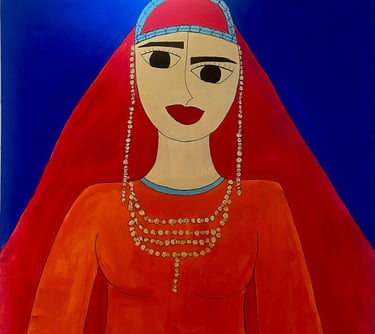
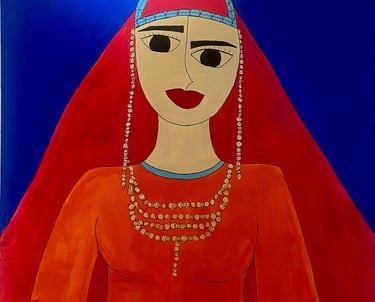
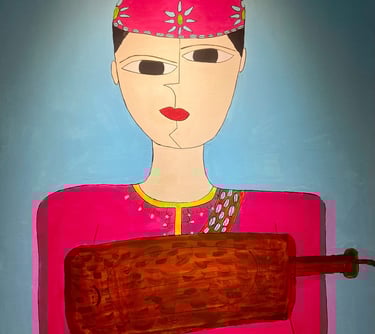
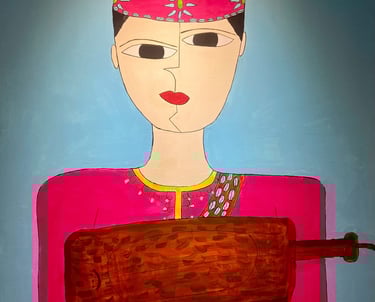
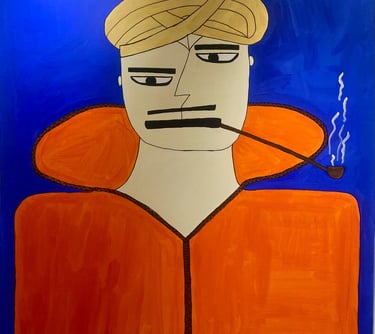
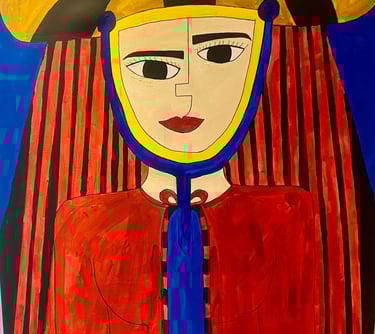
It is a gaze that chooses to see connection where others see fracture
Moroccan Cubism
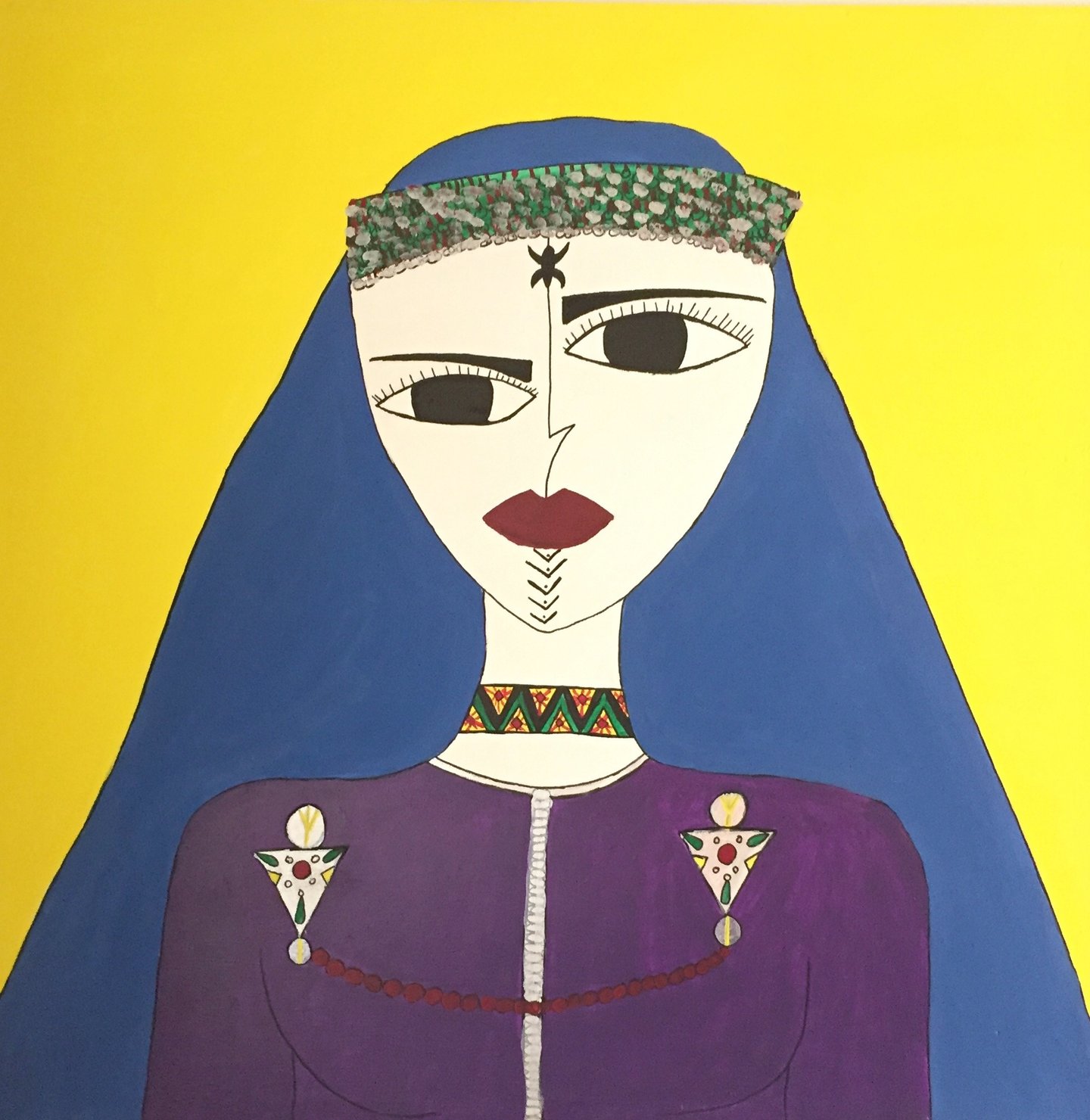
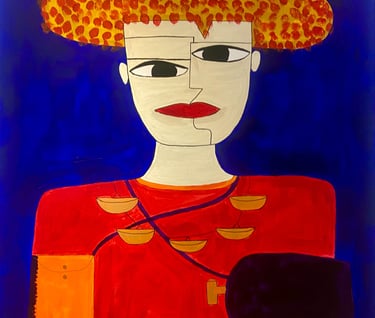
Moroccan Cubism is a contemporary artistic movement founded by Chaimaa Mellouki. Rooted in Moroccan, Amazigh, and African cultures, it develops an autonomous pictorial language that engages with the international contemporary art scene while affirming its own cultural, symbolic, and historical foundations.
Unlike historical European Cubism, Moroccan Cubism does not seek only to deconstruct forms. It uses fragmentation as a process of symbolic recomposition, where memory, identity, geometry, and transmission come together to create a new visual modernity.
An autonomous visual language
Moroccan Cubism integrates elements drawn from:
vernacular architecture
Amazigh systems of signs
African rhythms
oral and symbolic traditions
These elements are never treated illustratively.
They are transformed into contemporary visual structures capable of engaging with global art history without dissolving into it.
Between memory and contemporaneity
Moroccan Cubism is neither nostalgic nor referential.
It proposes a contemporary reading of the world, where identity is multiple, layered, and dynamic.
Memory becomes material.
Color becomes language.
Form becomes a space of circulation between eras.
An evolving movement
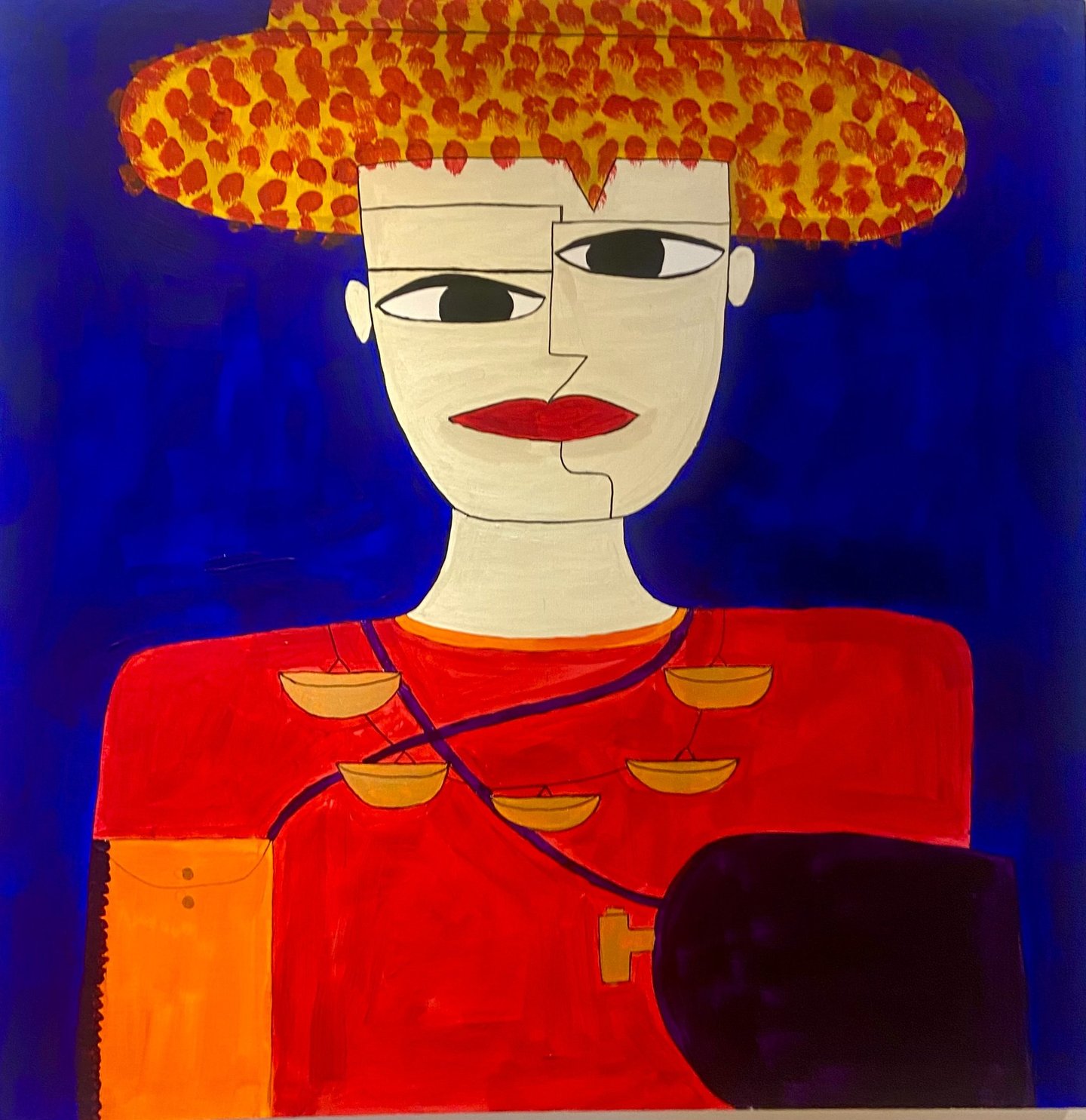
Moroccan Cubism is conceived as a living, evolving movement.
It unfolds through Chaimaa Mellouki’s pictorial series while maintaining strong conceptual and aesthetic coherence.
It addresses collectors, institutions, and cultural actors engaged in a rigorous reading of contemporary art.